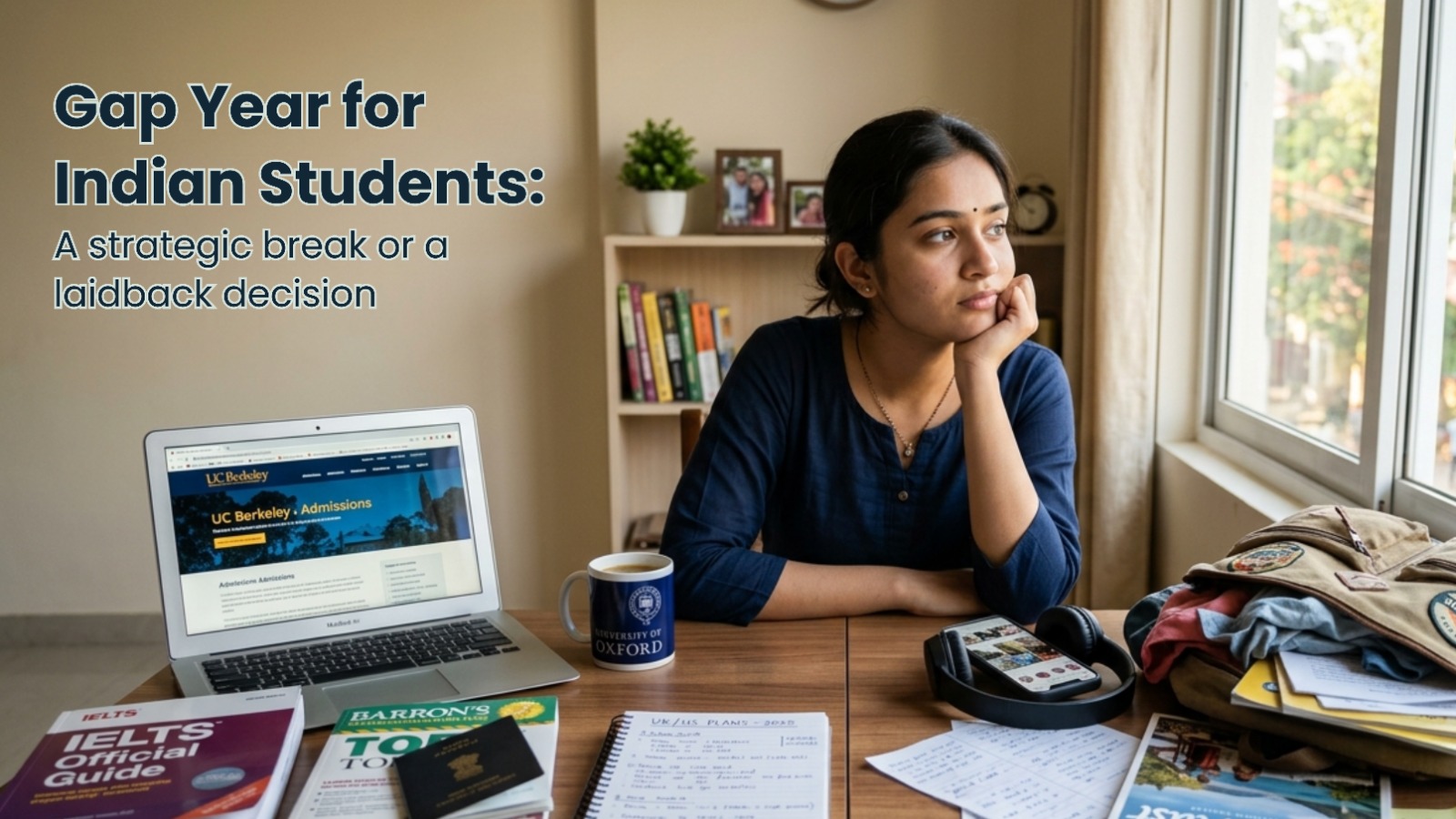
Gap Year for Indian Students: A strategic break or a laidback decision
A few months ago, I was reading an article about the rising trend of Indian students taking a gap year, and it made me think about exploring this shift more closely.
Why are more students choosing to pause before studying abroad? What is driving this change in mindset among Indian families today?
A New Normal for Indian Students
While the concept has been popular in the West since the post-World War II era, in India, taking a gap year was always seen as unconventional.
But post-pandemic, the idea of taking a planned break is slowly gaining acceptance.
More Indian students planning to study abroad are using this time to upskill, avoid burnout, or gain clarity before making an important academic decision. When used well, this break can add value instead of creating a gap.
Planning Holds the Key to Success
With proper planning, a gap year can provide learning that goes beyond formal education.
A 2023 study by the Indian School Counsellors Association found that 72% of counsellors believe students return with better focus after a structured gap year.
A gap year simply means taking a break from studies for a defined period before continuing education. The key difference is whether the break is planned or unplanned.
Making It Count
A gap year should have a clear goal. It is not just about taking time off.
For example:
- A commerce student working with a local CA firm to gain practical exposure
- An engineering student learning coding or data analytics through online platforms
- A student exploring different subjects through short certifications before finalising a
course - A study abroad aspirant preparing for IELTS or building a stronger application profile
In each case, the gap connects with a future goal. That is what makes it meaningful.
How Gap Years Are Viewed Globally
Most study abroad destinations accept gap years, but with conditions.
In the UK, up to 2 years is acceptable for undergraduate courses and up to 5 years for postgraduate programs if supported with valid reasons.
In the USA, there is no fixed rule, but gaps up to 5 years are commonly accepted when backed by productive activity.
Canada accepts gaps, but students must clearly justify them with proper documents, especially during visa processing.
Australia is stricter. Gap years are accepted only when supported by strong reasoning and documentation during the Genuine Student assessment.
New Zealand and Ireland also accept gaps, but longer breaks require stronger justification. The expectation is simple. A gap is acceptable. Lack of clarity is not.
What Counts as a Valid Gap Year
Not all activities are viewed equally. Some common acceptable reasons include:
Upskilling: Short-term courses or certifications aligned with your future studies
Competitive Exams: Preparing for exams like IELTS, GRE, CAT or JEE for 6–12 months
Volunteering: Working with organisations like Teach For India or local NGOs, especially in education or community development
Short-Term Work or Projects: Internships, freelance work, or assisting in a family business that adds practical experience
Unforeseen Situations: Health issues or personal circumstances, supported with valid documents
The focus should always be on learning and consistency.
Be Honest About Your Gap Year
Do not try to hide your gap. It often creates more doubt than clarity.
Mention it clearly in your Statement of Purpose. Keep the explanation simple and focused on what you did and what you learned.
Support your claims with documents like certificates, internship letters or score reports. Most importantly, connect the gap with your future plans. A well-explained gap builds credibility.
Conclusion
A gap year is not about following a trend. It is about making a thoughtful decision.
If used well, it can strengthen your profile and give you clarity. If not planned properly, it can delay your goals.
If you are unsure whether a gap year is right for you, speaking to an experienced counsellor at EduEdge can help you take a more informed decision.
Sometimes, a well-planned pause can move you ahead with more confidence.